Research
Our group develops computational and experimental tools to simulate, assess, and understand geosystems. We combine physics-based and data-driven modeling with laboratory experiments to address fundamental and applied research questions at the intersection of geoscience, subsurface energy, and the environment.
Fault Zone Characterization & Modeling
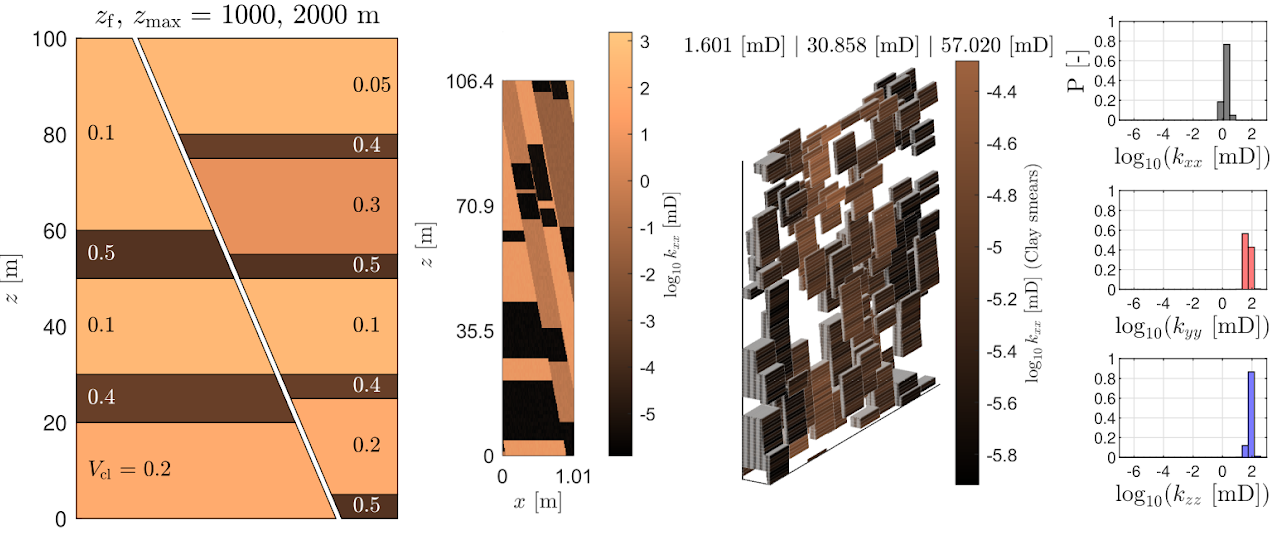
Faults are ubiquitous geologic discontinuities that exert a first-order control on subsurface fluid flow, yet their hydraulic and mechanical properties remain poorly constrained. Our group develops stochastic and physics-based frameworks to model fault zone architecture and its impact on hydraulic properties, combining outcrop observations, subsurface data, and numerical modeling.
Geologic CO\(_2\) Storage
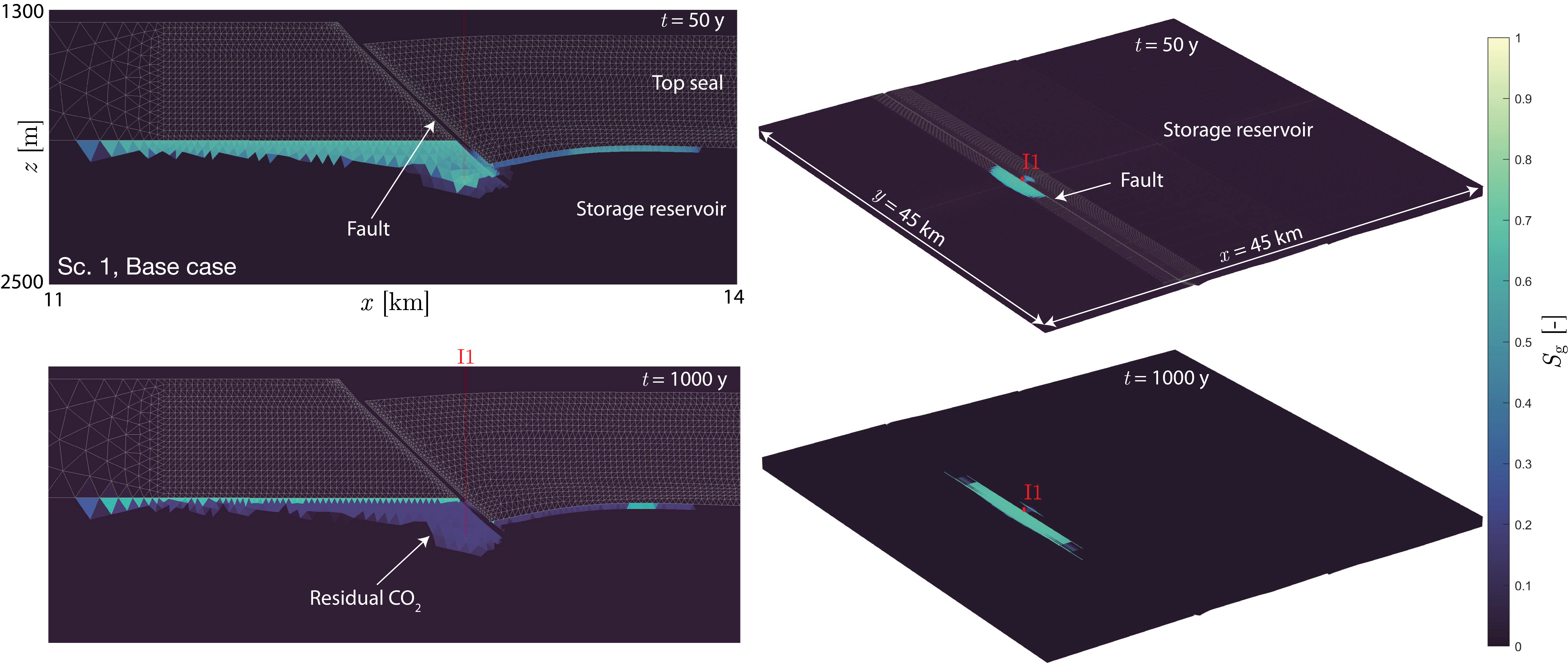
Geologic carbon dioxide storage is a key technology for climate change mitigation, but its large-scale deployment requires thorough understanding of subsurface risks. Our group models CO\(_2\) migration in faulted formations, validates simulations against laboratory and field data, and assesses storage capacity and containment at scales relevant for climate impact.
Geohazards in Subsurface Energy Systems
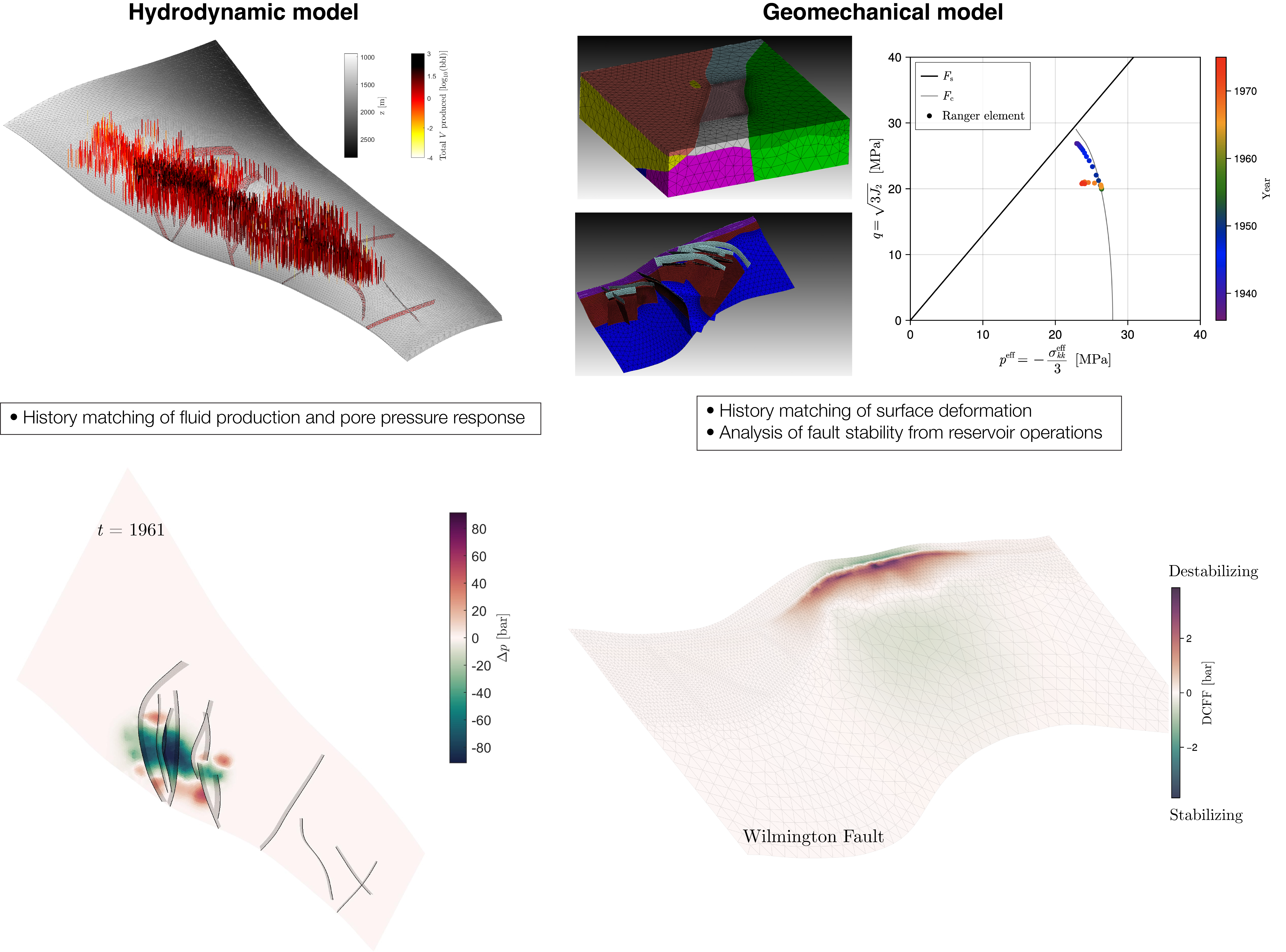
Subsurface energy operations involve the injection and/or withdrawal of fluids from the subsurface. These operations change the effective stress in the reservoir and surrounding formations, and can drive a range of geohazards, including fault reactivation and induced seismicity. Our group uses modeling tools that couple subsurface physics to investigate these hazards and develop risk assessment workflows.
Sponsors
We gratefully acknowledge the support of our research sponsors, without whom our research would not be possible:
- ExxonMobil Technology and Engineering Company (EMTEC)
- California Department of Conservation